
Underdog Stories / Sports analysis & explainers
Is There a One-Point Safety in the NFL?
What is a one-point safety in the NFL? The rule awards one point for a safety on a conversion try. Here's how a blocked kick could make it happen.
By Brett Hanson · Underdog Podcasts · September 23, 2026
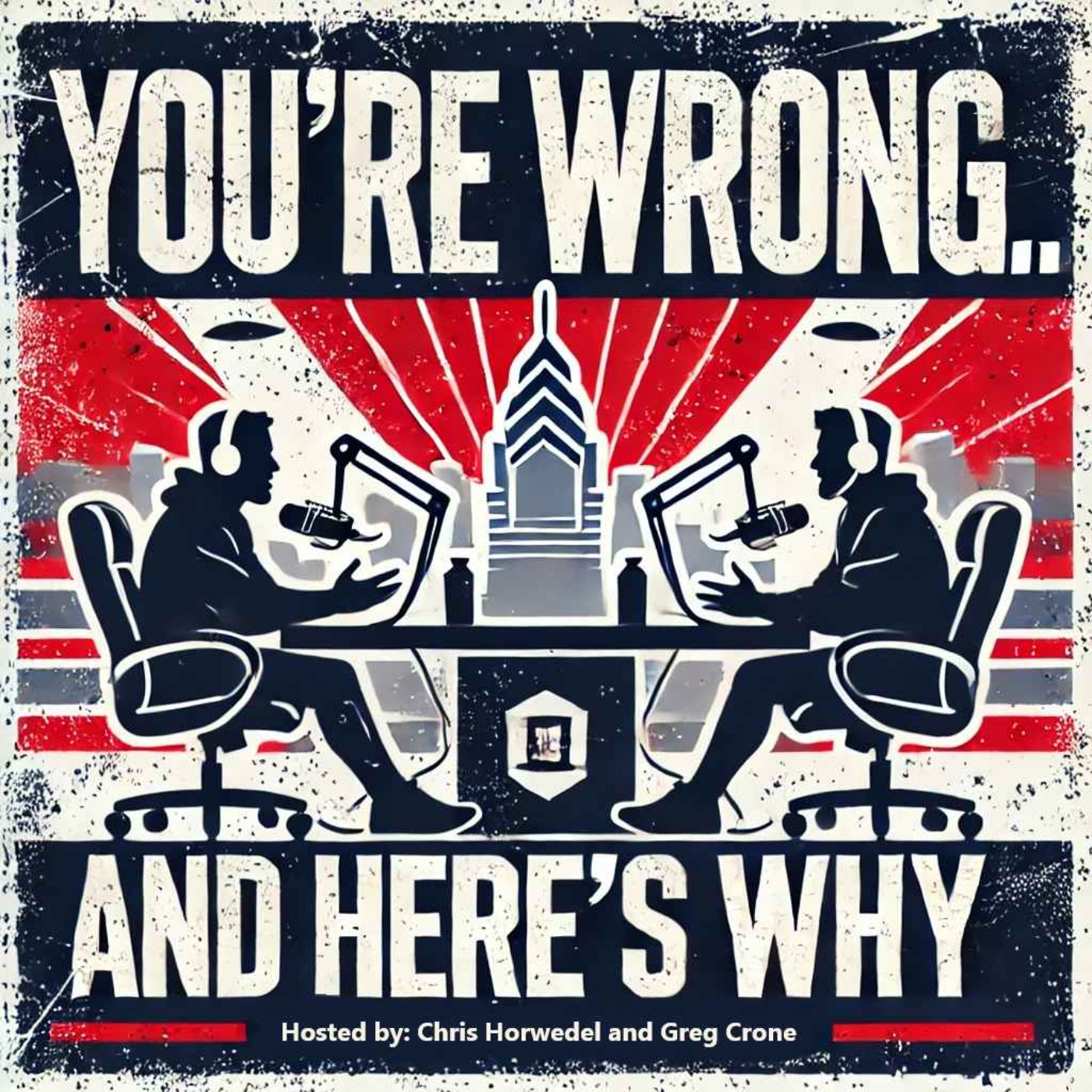
Chris Horwedel had reached the point in a football conversation where the score got silly. On You’re Wrong... And Here’s Why, he counted down a team’s imagined weekly points until he arrived at one. Greg Crone stopped him. “I don’t even know how you would score that,” he said.
There is an answer. A one-point safety in the NFL happens when a team gives up what would normally be a safety during the extra-point or two-point try after a touchdown. Its opponent gets one point instead of the usual two. The rule is real. An NFL game has yet to produce one.
Is a one-point safety possible in the NFL?
Yes. The NFL calls the play after a touchdown a try. A team can kick for one point or run or pass for two. Either team can score during that play.
Here’s the odd part. If the try ends in a safety, the team on the other end gets one point under the NFL rulebook, whether it began the try on offense or defense.
It helps to picture the field. Each team has an end zone it must keep the ball out of while it has possession. If a player takes the ball into his own end zone and is tackled there, that can be a safety. During an ordinary play, it is worth two points. During a try, it is worth one.
The try is its own small piece of the game. The game clock does not run. A kick starts with the ball at the defense’s 15-yard line; a run or pass for two starts at the two. When a team scores or the ball becomes dead, the try is over. There is no next down for everyone to sort out the mess.
That limit is part of the answer. A one-point safety cannot happen on a punt in the second quarter, however strange the punt may look. It needs the narrow window after a touchdown, while a conversion try is still alive.
How do you score a one-point safety in the NFL?
Picture the kick getting blocked. A defender reaches it, a teammate scoops up the loose ball, and now he has a long field ahead if he wants to score for his own team.
Now give the runner a bad decision. Suppose he advances out of his own end zone, turns back under pressure, and is tackled behind his goal line. The team that kicked would get a one-point safety. It has turned a blocked kick into a point, though hardly in the way its coach drew it up.
Crone pictured the ball getting “bumbled all the way down to the back of the end zone.” That captures the mood. It leaves out one detail that matters to the officials: who sent the ball there? A loose ball ending up in the end zone does not, by itself, settle the call. Depending on how it got there and who possessed it, the result may be a touchback instead.
There is another route. On a two-point attempt, the offense could lose so much ground that its ball carrier is tackled in its own end zone. That would give the defending team one point. The offense starts two yards from the far goal line, so this version asks a player to retreat almost the length of the field. He would have time to reconsider several choices.
A bad snap alone does not award a point. Nor does a defender merely touching an extra-point kick. The play must end as a safety under the rules that govern possession and the ball’s path into the end zone. One loose ball can make the rule possible. It takes more to make the score official.
Does a blocked extra point count as one or two points?
Horwedel’s first guess was close enough to start an argument. “Can’t you get a point if you return a blocked, blocked extra point?” he asked. Crone thought the return might be worth two. Crone had that part right.
If the defense blocks an extra point and carries the ball all the way to the other end zone, it scores two points. The same goes for a defensive touchdown after an interception or fumble on a two-point try. The defense has scored a touchdown during the try, and the NFL awards two points for it.
“Greg, we learned something.”
The Denver Broncos supplied a useful demonstration on November 13, 2016. Justin Simmons blocked a New Orleans Saints extra-point attempt. Will Parks picked up the ball and ran it to the Saints’ end zone. Denver won 25–23. That was a two-point defensive return, not a one-point safety.
To get Horwedel’s one point, the player with the ball would need to end up in trouble at his own goal line. The directions are easy to mix up when a kick has been blocked and everyone is running at once. The scoreboard is less forgiving.
Before the 2015 season, the NFL changed its conversion rules to allow the defense to return a failed try for two points. It also moved the spot for extra-point kicks back to the 15-yard line. Those changes made plays like Parks’s return possible. They did not make a one-point safety a likely Sunday sight.
How many times has a one-point safety happened in the NFL?
Zero documented times. The one-point safety sits in the NFL rulebook without a recorded example in a game. Horwedel and Crone were learning about a score they had no familiar NFL play to point to.
The odds of the needed sequence are easy to understand without putting a number on them. First, there must be a touchdown and a try. Then something must go wrong badly enough for the ball to change direction or possession. Finally, the team holding it must be responsible for taking it behind its own goal line and getting stopped there.
Most failed conversions end more quietly. A kick misses. A pass falls incomplete. A runner is tackled short. Even when the defense gains the ball, it is trying to get away from its own end zone. That is usually a sound plan.
The Denver play shows the more common prize for a defense that recovers a blocked kick: keep running toward the opposite goal line. A returner who does that gets two points if he makes it. A returner who heads back toward his own goal line is volunteering for a very different entry in the record book.
Is there a one-point safety in college football?
There is, and college football has managed to put one on a scoreboard. On January 3, 2013, Oregon played Kansas State in the Fiesta Bowl. Marcus Mariota scored a touchdown for Oregon in the third quarter. Kansas State’s Javonta Boyd then blocked the extra-point kick.
The block did not end the play. Kansas State’s Allen Chapman wound up tackled in his own end zone, and Oregon received a one-point safety. The point made the score 32–10. Oregon finished with a 35–17 win.
Texas recorded another against Texas A&M on November 26, 2004. Texas’s records describe a blocked point-after kick recovered by the defense, then fumbled and recovered by the offense in the end zone. The score sheet gave Texas the point. Its account is also a warning against treating every blocked kick as the same play.
College has seen it. Those examples started with a blocked kick, then the team that made the block ran into more trouble and somehow turned a good special-teams play into an extra point for the other side.
Can a one-point safety leave a team with just one point?
In theory, yes. If a team gives up a touchdown and then earns a one-point safety on the try, it has one point on the scoreboard. That is how a game can end 6–1. It would require the team that just scored six to suffer a safety on its own conversion attempt.
The more familiar college examples went the other way. Oregon and Texas had already scored touchdowns; their conversion safeties added one point each. The result looked much like a successful extra-point kick on the scoreboard, even though the ball had gone nowhere near the uprights.
When Horwedel read out the rule during “342: NFL Week Two Was Weird,” Crone thought about the chaos needed on a two-point try. Horwedel offered the blocked kick. Crone accepted that one, then returned to the loose ball. Somewhere in that pile is a point the NFL has never had to put up.
The full episode of You're Wrong... And Here's Why is on Underdog Podcasts, with the rest of the network's shows.
People also ask
What is a one-point safety in football?+
It is a safety that happens during the conversion try after a touchdown. Instead of the usual two points for a safety, the opposing team receives one. The rule applies to an extra-point kick or a two-point attempt. What matters is whether the play meets the rules for a safety, not whether a kick was blocked.
Can a team score one point on a blocked extra point?+
Yes, though a block alone does not score anything. A one-point safety could follow if the team that gains the ball later takes it into its own end zone and gives up a safety. If the defense returns the blocked kick to the opposite end zone, it earns two points instead.
Has a one-point safety happened in college football?+
Yes. Oregon received one against Kansas State in the Fiesta Bowl on January 3, 2013, after Kansas State blocked a kick and its player was tackled in his own end zone. Texas also recorded one against Texas A&M in 2004. Neither play was a routine blocked extra point.
Could an NFL game end 6–1?+
The rules allow it. One team could score a touchdown, then give up a one-point safety on its conversion try. Its opponent would have one point without scoring a touchdown or field goal. That remains a possible score, rather than a result produced by a documented NFL one-point safety.
Sources
- 1.2026 NFL Rulebook, Rule 11: Scoring
- 2.No. 5 Ducks Fly Past No. 7 Kansas State, Take Tostitos Fiesta Bowl, 35–17
- 3.Texas Longhorns Bowl Records and History
- 4.Blocked Point-After Kick Lifts Broncos Past Saints, 25–23
- 5.NFL Moves Extra Point to 15-Yard Line for 2015 Season
- 6.NFL One-Point Safety: Why Football’s Rarest Score Never Happened