Underdog Stories / Sports analysis & explainers
Does Spending More Money Help MLB Teams Win?
Does spending more money help MLB teams win? The Mets' latest deal tests that idea, while the Dodgers, Yankees and Brewers show what else a roster needs.
By Brett Hanson · Underdog Podcasts · November 24, 2026
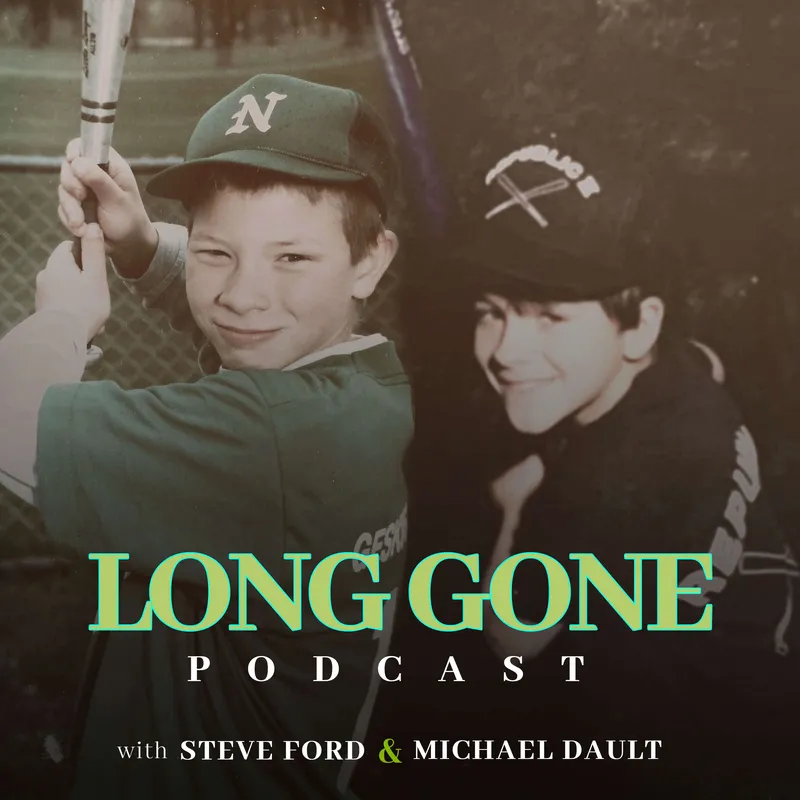
Michael Dault was trying to warm his garage. Steve Ford had put on a cardigan. Then the two hosts of Long Gone turned to a baseball question with a much larger heating bill: what would the Mets get for another enormous contract?
Does spending more money help MLB teams win? Yes. Money can buy proven players, cover mistakes and keep a good roster together. It raises a team’s chances. It cannot make expensive players stay healthy or turn a group of famous names into a good lineup. The Mets are testing that difference again.
In the episode “291: Mets Doubling Down; Cubs All-In?”, Dault called his Mets offseason headline “Mo Money, Mo Problems.” Ford laughed at the title. He was less amused by the roster question behind it: what happens if all that spending produces the same result?
Does spending more money help MLB teams win?
The broad answer is yes. Eight of baseball’s ten highest-payroll teams reached the 2026 postseason. That is a strong case against the idea that money means nothing. Clubs with larger budgets can pursue stars and still afford help elsewhere.
The Mets show the limit. They went 74–88 in 2026 and missed the playoffs. On November 22, reports said they had agreed to a nine-year, $450 million contract with two-time Cy Young Award winner Tarik Skubal. That is an extraordinary pitcher to add to a losing team.
Dault said spending “does get you far, but it doesn't guarantee you can win.” His distinction matters. Payroll is a way to buy more chances at good play. Wins still come from the players available on a given night, the replacements behind them and the runs the whole club can produce.
Skubal could make the Mets much better. He cannot pitch every game. Ford said paying so much for someone who plays every fifth day made him uneasy, even while he gave Skubal full credit for taking the deal. The contract pays for a great pitcher. It does not come with another four starters.
Why haven't the Mets' big contracts been enough?
The Mets have tried this before. Max Scherzer signed ahead of the 2022 season, and Justin Verlander joined him for 2023. By that July, New York had traded Scherzer to Texas. The club received prospect Luisangel Acuña, which at least gave it a younger player in return.
Then came Juan Soto. His 15-year, $765 million agreement before 2025 gave the Mets one of baseball’s best hitters. New York still finished 83–79 that year and missed the playoffs. The team fell to 74 wins in 2026, despite Soto remaining on the roster.
That does not make Soto a bad signing. Nor does it mean Skubal will fail. It means a contract can do exactly what it promises while the team falls short. One great hitter takes his turns in the order. One great starter has to hand the ball to somebody else.
Ford recalled the Scherzer-Verlander plan and asked what the Mets would need to change if another costly roster fell short. Dault worried about the same thing. His concern was less about a player’s right to earn money than about the club’s habit of seeking one more expensive answer.
The Mets also have young talent. Pitcher Nolan McLean gave them reason for hope in 2026. The useful question is how much help the club can build around him and Skubal. Signing a star is one decision; keeping enough capable players beside him is a season’s worth.
What did the Mets give up in the Pete Crow-Armstrong trade?
Dault kept coming back to Pete Crow-Armstrong. The Mets drafted the outfielder in the first round in 2020. At the 2021 trade deadline, they sent him to the Cubs for Javier Báez and Trevor Williams, hoping for help right away.
Báez left New York after that season. Crow-Armstrong grew into a star in Chicago, where the Cubs had years to work with him. By 2026, he had produced a 40-home-run, 40-steal season. It is the sort of trade that gets more painful each time the former prospect makes a catch.
Dault described Crow-Armstrong as the kind of player a club wants to build around. There is some hindsight in that judgment. The Mets traded a 19-year-old who had played only six games that season before a shoulder injury. No one could have counted on the player he became.
That uncertainty is why building a roster is hard. A team seeking help for a playoff race may spend a prospect it will later miss. The Cubs made the opposite choice in that deal: they took on the wait and gained years of control over Crow-Armstrong.
“I don't think spending money is an automatic success in this league.”
Money could help the Mets pay for an outfielder now. It cannot bring back the years in which Crow-Armstrong developed. That is the part of Dault’s complaint about “drafting and developing” that a new contract cannot settle.
How do the Dodgers combine spending with homegrown players?
Dault pushed back against the idea that the Dodgers simply bought their success. They developed players, too. He was right, though the size of each contribution is worth getting straight.
On MLB’s accounting of 2026 playoff rosters, Dodgers free-agent additions produced 24.5 wins above replacement. Their homegrown players produced 10.8. The figure estimates how many wins players added compared with readily available replacements. It is useful for seeing where a team got its production, even if it cannot explain every result.
Los Angeles got much of its free-agent value from stars such as Shohei Ohtani and Yoshinobu Yamamoto. Some came from within. The team drafted catcher Will Smith and signed and developed outfielder Andy Pages. Trades brought in Mookie Betts and Skubal, who pitched for the Dodgers before reaching his Mets agreement.
Those details make the Dodgers a different example from either a pure spending club or a farm-only one. They found players in several ways and paid to keep the roster strong. Smith did not become less useful because Ohtani arrived. Ohtani did not need to be a bargain for his production to count.
The method is expensive. It also asks a front office to do more than write checks. If a young player fills one job well, money can go toward another. If a star misses time, the club needs someone ready to play. A payroll number cannot take an at-bat.
Did the Yankees buy their championship teams?
Dault brought up the Yankees because their late-1990s teams often get reduced to a spending joke. That misses something. He said their core came from players the club developed: Derek Jeter, Mariano Rivera, Jorge Posada and Andy Pettitte, who gave those teams years of help from within.
The Yankees also sought help outside the organization. Before the 1996 championship season, they traded for first baseman Tino Martinez. He hit 25 home runs and drove in 117 runs that year. They traded for Paul O’Neill earlier in the decade, and he became part of four title teams.
The sequence matters. New York had young players who could hold major jobs, then found established players to improve the club around them. Ford agreed with Dault’s point about the core. Neither host was claiming those Yankees were cheap.
There is a modern version, too. The 2026 Yankees’ postseason roster included homegrown pitcher Cam Schlittler and hitter Ben Rice. Their rotation also drew on free-agent signings, while trades supplied more of the lineup. Clubs need not copy the 1996 Yankees to learn from them: a big budget works better when the team can find players before they become big-budget purchases.
Can a lower-payroll team win the World Series?
The Brewers gave Ford his other offseason headline, “Brewing Up Success.” Milwaukee had just won the 2026 World Series, its first, after a 103–59 regular season. MLB put its final 40-man payroll at $154 million, 19th among the 30 clubs.
Ford asked whether other teams might follow Milwaukee’s lead in developing players. The Brewers offered a strong case for it. Ten players they had signed or drafted produced 31.4 wins above replacement on their projected postseason roster. Brice Turang came through the draft; Jackson Chourio came through the club’s international program.
Milwaukee also made plenty of trades. Fifteen players on that postseason roster had arrived that way, producing another 21.7 wins above replacement. So its title was no lesson in refusing to acquire help. The Brewers found good players through scouting, taught them well and made deals that suited the roster they had.
There is a catch. A lower payroll leaves less room to keep every player once salaries rise. The Brewers have traded accomplished pitchers, including Corbin Burnes and Freddy Peralta, as those decisions approached. Winning on a tighter budget takes more than one fine draft; the club has to keep finding the next player.
Dault joked that the Brewers would return to their usual work while other teams talked about the parade. By November, Milwaukee had already made contract decisions on members of its title team. The last six outs of the World Series belonged to closer Trevor Megill. The next order of business was his 2027 salary.
The full episode of Long Gone is on Underdog Podcasts, with the rest of the network's shows.
People also ask
Does the team with the highest payroll usually win the World Series?+
No. A high payroll can help a club reach the postseason, but it does not decide a short series. Eight of the ten highest-payroll teams made the 2026 playoffs, while the Brewers won the World Series with a 40-man payroll ranked 19th. Those results show both the advantage money can buy and its limit.
Why did the Mets sign Tarik Skubal after a losing season?+
The Mets needed stronger starting pitching after finishing 74–88 in 2026. Skubal, a two-time Cy Young Award winner, was an unusually strong answer to that need, with a reported nine-year, $450 million agreement. Whether the move changes the team’s record will also depend on the rest of its rotation and roster.
Are the Dodgers successful because they spend more?+
Spending is a large part of their success. MLB credited free-agent additions with 24.5 wins above replacement on the Dodgers’ 2026 postseason roster. The club also got production from players it developed, including Will Smith and Andy Pages, and from trades. Its strength comes from using those routes together.
How did the Brewers win with a smaller payroll?+
Milwaukee got major help from players it drafted or signed young, including Brice Turang and Jackson Chourio. Trades supplied a large share of its 2026 postseason roster as well. The Brewers finished 103–59, then won the World Series with a payroll ranked 19th. Their scouts and player development helped stretch that spending.
Sources
- 1.Long Gone
- 2.Tarik Skubal agrees to deal with Mets
- 3.2026 MLB standings
- 4.Here's how the 2026 postseason teams were built
- 5.Brewers, Rays face roster decisions this offseason after World Series
- 6.Mighty Brewers capture first World Series
- 7.Mets rotation offseason questions
- 8.Javy Báez and Trevor Williams dealt to Mets for Pete Crow-Armstrong
- 9.World Series winners' biggest offseason moves
- 10.Mets trade Max Scherzer to Rangers
- 11.Mets front office taking heat after roster departures